MODON
Phased program to instrument 95 Manufacturing Facilities with utility meters, fire‑alarm, gateways and A.I cameras
This case study showcases a large-scale deployment of connected sensors supporting smart factory and smart city initiatives. The solution leverages a cellular-first IoT architecture to enable real-time safety monitoring, energy tracking, environmental sensing, and asset visibility across distributed locations.

- Industry Type
- Government
- Company Size
- Large
- Number of Employees
- 20,000
- Location
- Riyadh, Saudi Arabia
The MODON IoT deployment is a large-scale implementation aimed at enabling digital transformation across smart factory and smart city environments. The project focuses on integrating field-level sensing devices with centralized monitoring systems to provide continuous visibility into safety, energy usage, environmental conditions, and asset movement.
By leveraging a cellular-based IoT architecture, MODON ensures that data collected from geographically distributed locations is transmitted reliably to backend systems without reliance on local IT infrastructure. This approach supports consistent performance across industrial and urban settings and allows the platform to scale as additional sensors and use cases are introduced.
The IoT deployment plays a foundational role in MODON’s broader smart infrastructure strategy by enabling proactive monitoring, faster incident response, and data-driven operational decision-making
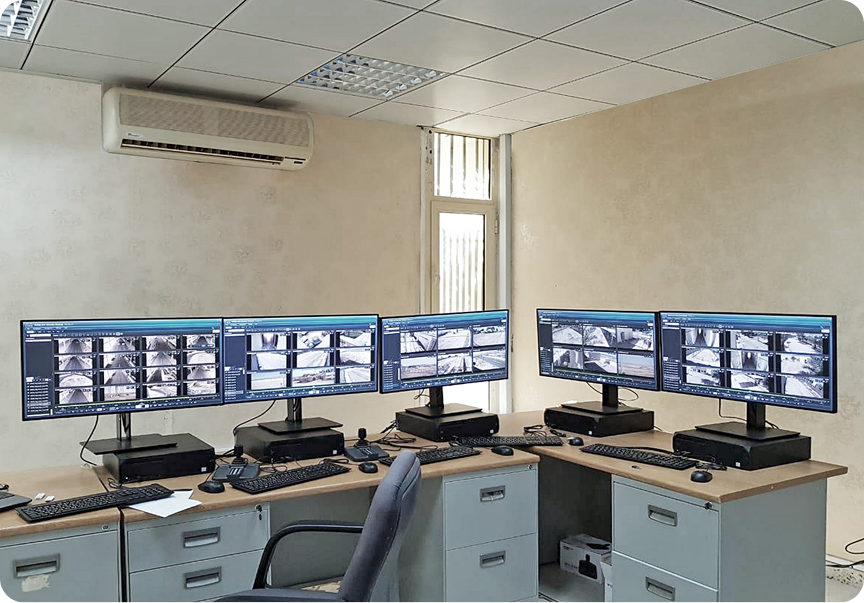
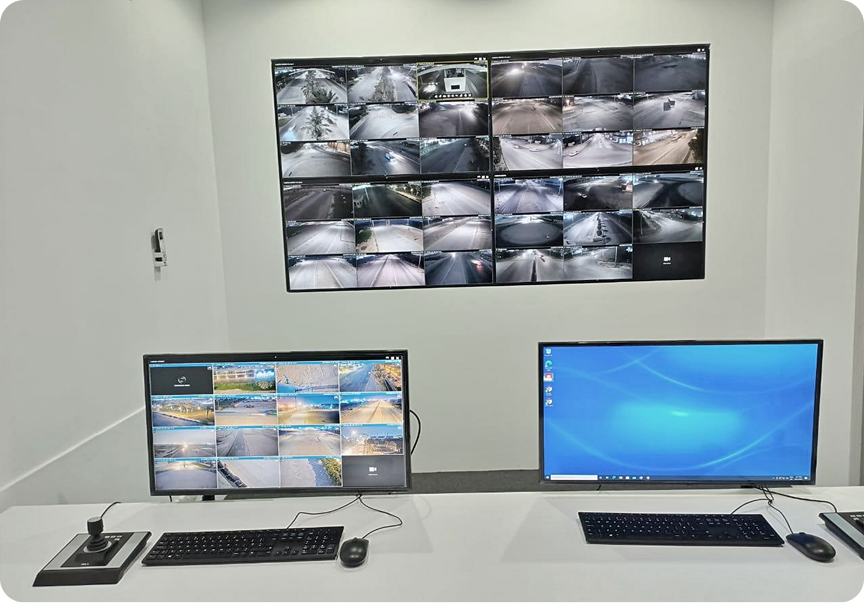
Connectivity Approach
Private LoRaWAN macro gateways create factory-wide coverage without new trenching; critical video streams ride a point-to-point wireless mesh back to edge servers, with fiber hand-off at each industrial city hub. Dual-SIM routers keep links alive during ISP outages.
Sensor Integration
Smart meters (electric, water, gas), fire-alarm panels, environmental probes, and 8MP AI cameras publish to a common MQTT broker. Rule-based analytics correlate utility spikes with equipment faults, and CCTV validates alarms in under two seconds.
Edge AI
Rugged GPU servers at cluster poles run object-detection and anomaly models locally —streaming only metadata to the cloud and cutting backhaul bandwidth by 90% while meeting 500ms alert SLAs.
Cellular Backup
Each gateway stack includes a 4G/5G dual-SIM router with local cache; telemetry backfills automatically once primary links are restored, guaranteeing zero-loss for compliance audits.
Permit System
AI-driven ticketing engine aggregates sensor alarms, utility anomalies and security events into actionable tickets, auto-assigning them to facility teams and tracking SLA compliance in real time.
IoT Devices and Sensors Deployed
The IoT deployment for MODON includes a defined set of sensors deployed across smart factory and smart city environments. These sensors are responsible for safety monitoring, energy measurement, infrastructure validation, utilities metering, indoor environment monitoring, and asset tracking. All sensors listed below are actively deployed as part of the MODON IoT implementation.
Cameras
Safety Helmets
Electricity Sensors
Testers
Dry Contacts
Irrigation Sensors
Street Lighting
Fire Alarms
Air Quality Sensors
Intrusion
Water Leakage
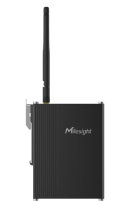
235
Milesight UC-300 Fire Alarm Sensor
Project
Smart Factory
Purpose
Used to detect change in the status of Fire Alarm Panel
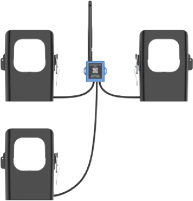
5
Milesight CT-310 Smart Current Transformer
Project
Smart Factory
Purpose
Used to calculate the total consumption of electricity
4
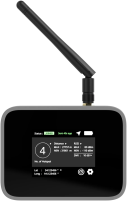
RAK10701-P WisNode-Field Tester PRO
Project
Smart City
Purpose
Shows number of gateways, hotspots in range and their distance
7
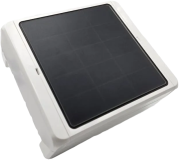
Lobaro Wireless M-Bus Gateway
Project
Smart City
Purpose
Used for automatic recording and transmission of consumption data such as water, heating, etc.
IoT Controller and Connectivity
The MODON IoT architecture is built on a cellular-first connectivity model to ensure wide-area coverage, high reliability, and ease of deployment. All sensors communicate using cellular connectivity, eliminating dependency on local networks and reducing on-site configuration requirements.
Physical SIM cards are used to provide stable and secure connectivity, with network coverage delivered through multiple providers to enhance availability. This design allows sensors to be deployed across factories, city infrastructure, and remote locations while maintaining consistent communication with central systems.
This architecture supports scalability, centralized management, and long-term expansion of the MODON IoT ecosystem.
Sensor Tagging Structure
To manage a growing number of deployed devices effectively, the MODON IoT platform uses a structured tagging framework. This framework enables logical grouping of sensors, simplifies operational management, and supports filtering, reporting, and analytics within the platform.
Tags are applied at both the sensor level and the use case level, allowing stakeholders to view data from technical and business perspectives. This approach ensures clarity when monitoring deployments across multiple projects and environments.
Sensor Tags
- Fire Alarm Sensor
- Smart Current Transformer
- WisNode-Field Tester PRO
- Wireless M-Bus Gateway
Use Case Tags
- Fire Safety Monitoring
- Energy Consumption Monitoring
- Network Coverage and Infrastructure Validation
- Utilities Metering and Consumption Reporting
Technologies Used
The MODON IoT deployment utilizes a combination of wireless communication technologies selected to balance coverage, power efficiency, and reliability. These technologies enable seamless data transmission from sensors deployed across varied environments.
Together, these technologies provide a flexible and scalable foundation for current and future IoT use cases within the MODON ecosystem.
Cellular IoT (4G LTE)
Used for primary connectivity, ensuring wide-area coverage and consistent performance across factory and city deployments.
LoRa / LoRaWAN
Used by compatible sensors operating in the sub-GHz ISM band to support low-power, long-range communication.
Data Monitoring and Visibility
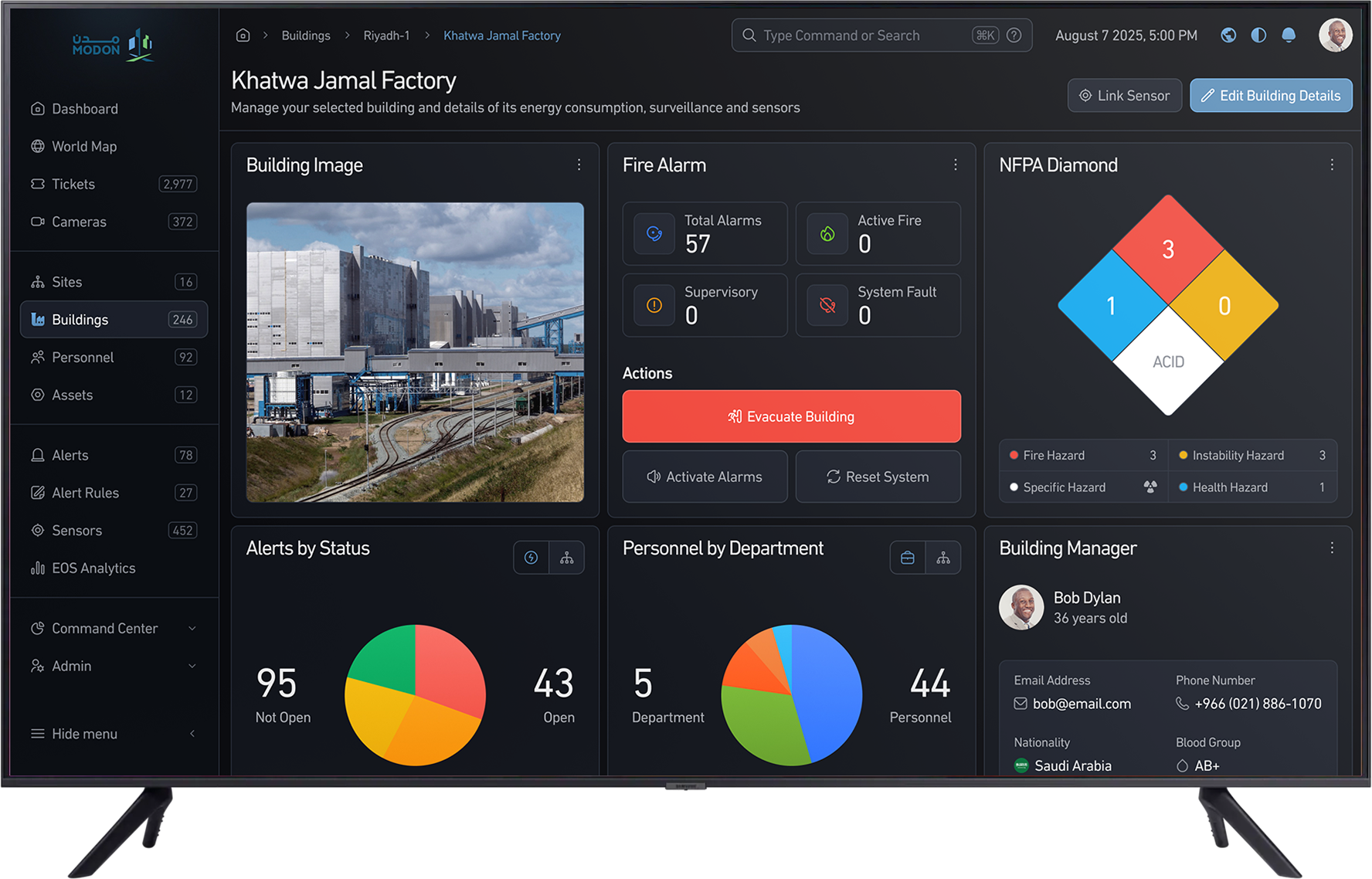
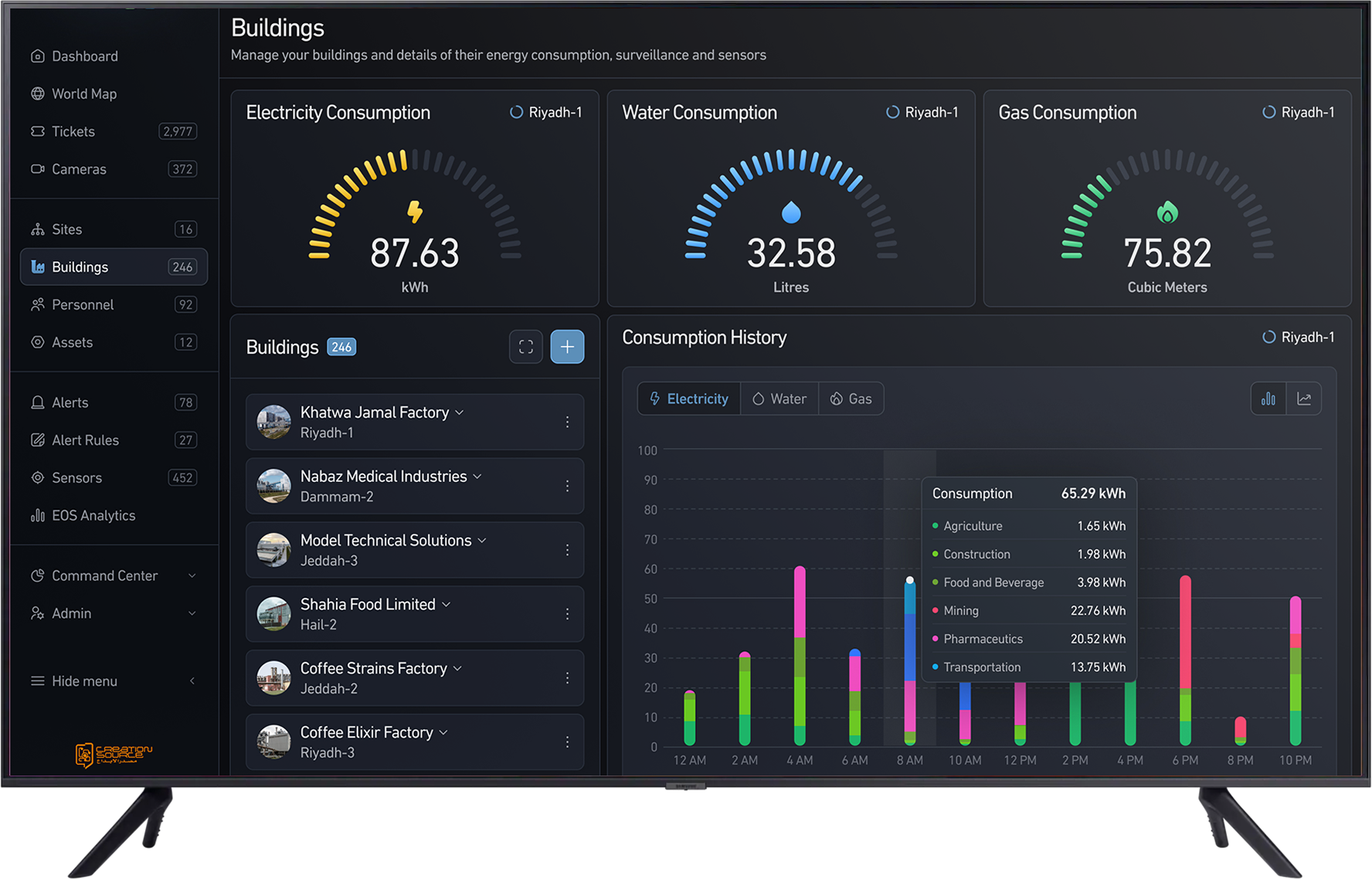
Data collected from deployed sensors is transmitted in near real time to centralized monitoring systems, where it can be visualized through dashboards and used to generate alerts. This enables stakeholders to gain immediate insight into infrastructure status, environmental conditions, and asset movement across both smart factory and smart city environments.
Historical data retention further supports trend analysis, reporting, and informed decision-making, allowing MODON to evaluate performance over time and refine operational strategies.
Overview of Factory Details
Overview of Factories' Utility Consumption
Operational Impact and Benefits
The IoT deployment for MODON delivers measurable operational value by enabling continuous, automated monitoring across critical infrastructure. By reducing reliance on on-site checks, the solution improves operational efficiency and allows teams to focus on proactive issue resolution.
Accelerated Emergency Response
Real-time fire safety sensors provide instant visibility into alarm status changes, ensuring faster reaction times.
Data-Driven Energy Optimization
Continuous electricity monitoring identifies specific consumption patterns, allowing stakeholders to implement energy reduction.
Shift to Proactive Maintenance
Teams can utilize automated alerts to resolve potential issues before they escalate into critical failures.
Streamlined Workforce Efficiency
The transition to automated, remote monitoring eliminates the need for frequent manual inspections.
Enhanced Infrastructure Transparency
A unified IoT ecosystem provides a single source of truth for critical infrastructure, replacing fragmented manual checks.

Scalability and Future Readiness
The modular and cellular-based design of the MODON IoT deployment ensures that the solution is inherently scalable. Additional sensors can be introduced with minimal changes to the existing architecture, allowing new use cases to be onboarded efficiently.

Modular Architecture for Rapid Expansion
The system's modular design allows for the seamless addition of new sensors without requiring overhaul of existing infrastructure.
Cellular-Based Flexibility
By leveraging cellular connectivity, the solution can be deployed across vast or remote areas with minimal hardware changes.
Efficient Onboarding of New Use Cases
The flexible framework enables the quick integration of diverse applications, from water management to smart lighting.
Long-Term Future-Proofing
Built to support evolving smart city standards, the ecosystem is designed to accommodate next-generation IoT technologies.
Centralized Control at Scale
As the network grows from dozens to thousands of nodes, the platform maintains a unified "single pane of glass" view.
Conclusion
The MODON case study shows how unifying energy, water and safety telemetry into a single command dashboard delivers measurable operational gains. By replacing siloed reporting with always-on visibility, MODON achieves faster incident response, data-driven maintenance and stronger compliance assurance across its entire industrial estate.